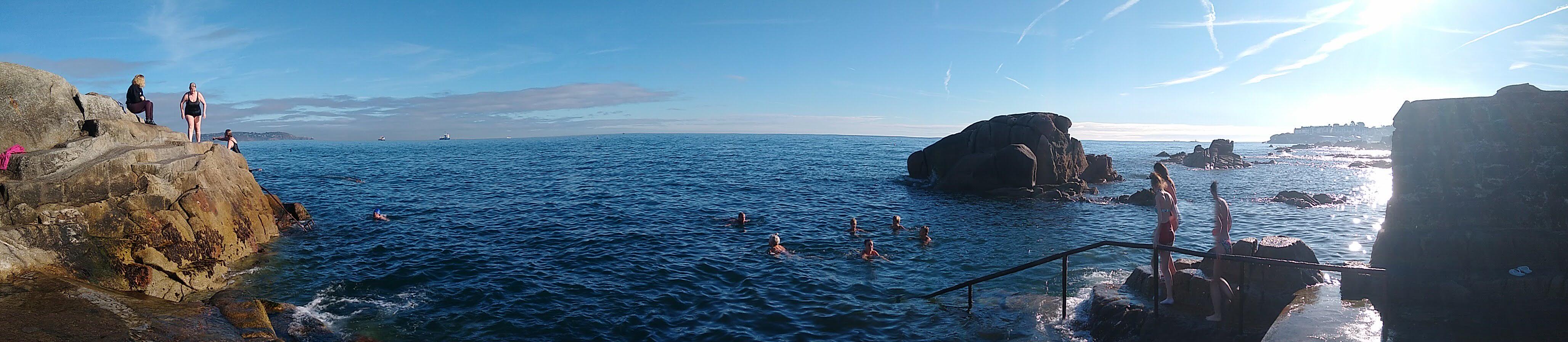
The Forty Foot Swimming Guide: Everything You Need to Know
The Forty Foot has been Dublin’s favourite swimming spot for over 250 years. A rocky outcrop on the southern tip of Dublin Bay, with steps carved into the stone and the Irish Sea waiting below. On any given day - rain, shine, or December - you’ll find locals climbing down those steps and into the water.
We know it well. Fitzgerald’s has been five minutes up the road for generations. We’ve seen every type of swimmer walk through the door afterwards - the year-round regulars who swim in togs in January, the tourists who dip a toe and retreat, and everyone in between. This guide is what we’ve learned from all of them.
What is the Forty Foot?
The Forty Foot (sometimes written “40 Foot”) is an open-air bathing place at Sandycove Point, on the south side of Dublin Bay. It’s a natural swimming area formed by rocky ledges and concrete steps that lead down into the Irish Sea. No pool, no heating, no facilities. Just the sea, the steps, and whoever’s brave enough to get in.
The name comes from the 40th Foot Regiment of the British Army, who were stationed at the nearby Martello Tower in the 19th century and used the spot for bathing. Before that, locals had been swimming here for generations. The spot has been in continuous use for over 250 years.
The Forty Foot was men-only until July 1974 - the sign on the outside used to read “Forty Foot Gentlemen Only,” which confused more than a few visitors. A group of women swimmers decided that was nonsense and jumped in, and it’s been for everyone since.
Where is the Forty Foot?
Sandycove, south County Dublin. On the coast, about 14 kilometres south-east of Dublin city centre. It sits right beside the James Joyce Tower and Museum - the Martello tower where Joyce stayed for six nights in 1904 and set the opening chapter of Ulysses.
How to get there
By DART (easiest): Get the southbound DART from Connolly, Tara Street, or Pearse Station to Sandycove & Glasthule. It’s about 25 minutes from the city centre. Walk down Sandycove Road towards the sea - the Forty Foot is signposted. Fifteen minutes from the station. The DART runs every 10-15 minutes.
By bus: Dublin Bus routes 59 (from Dún Laoghaire to Killiney) and 111 (from Dalkey to Cherrywood) both stop within a short walk of Sandycove. Handy if the DART timetable doesn’t suit, or if you’re coming from the south side rather than the city centre.
On foot from Dún Laoghaire: Walk along the coastal path from the harbour. It’s about 15 minutes, flat the whole way, and one of the nicest short walks in Dublin. You’ll pass the piers, the waterfront, and then you’re there.
By car: Parking near the Forty Foot is very limited. There’s more parking up near Sandycove Road or at the DART station, but on summer weekends it fills up early. The DART is the easier option.
From Dublin Airport: Allow about an hour. Bus or taxi to the city centre, then DART south. 702 Aircoach stops in Glasthule. Or a taxi straight there in about 40 minutes (traffic dependent).
Parking at the Forty Foot
Worth a section of its own, because this catches people out.
There is very little parking right beside the Forty Foot itself - a handful of spaces on the roads near the Joyce Tower, and they go early, especially on summer mornings and weekends. Do not bank on parking anywhere near.
Better options:
- Sandycove Road and the surrounding side streets - a 5 to 10 minute walk down to the Forty Foot.
- Sandycove & Glasthule DART station car park - small but usually the most reliable bet, then a 15-minute walk.
- Dún Laoghaire - more car parks, then walk the coastal path (15 min) or jump one stop on the DART.
Honestly: if it’s a sunny Saturday in July, take the DART. You’ll spend less time circling for a space and more time in the water.
Changing facilities at the Forty Foot
There’s a basic open-sided changing shelter - not much in the way of privacy or warmth. There’s a cold outdoor shower for rinsing off the salt. That’s it. No lockers, no toilets on site (there are some nearby).
Some regulars bring a changing robe or poncho - Dryrobe and the like - so they can get changed on the steps with a bit of dignity and stay warm while they do it. A decent towel works, but a robe is better in winter.
There are no lockers. Leave valuables at home or in the car, or bring someone who’ll stay on the rocks and hold your bag.
Is it safe to swim at the Forty Foot?
Yes - when conditions are right.
The Forty Foot is a natural sea swimming spot, not a swimming pool. That means conditions change with the weather, the tides, and the wind. Here’s what to watch for:
Check the wind direction. This is the big one. If the wind is blowing from the east, the water at the Forty Foot gets rough. Waves crash over the steps and getting in and out becomes difficult. On a calm, still day - or when the wind is from the west - the water is usually flat and manageable. Check the Dublin Bay Buoy or our live swimming conditions page before you go.
Check the tides. There’s always enough water to swim at the Forty Foot - that’s one of its advantages. But at low tide, the entry steps are exposed and it’s an easier climb down. At high tide, the water comes right up to the railings and you can jump straight in (if you know the depth). The locals have this sorted - watch them.
Go with someone. Especially if it’s your first time. Not because it’s dangerous, but because it’s more fun and someone can hold your stuff.
Don’t swim alone in rough conditions. If there are no other swimmers in the water, ask yourself why. The regulars know when to stay out.
Swim shoes are a good idea. The rocks and steps are slippery.
Cold water swimming safety
- There’s no lifeguard at the Forty Foot - ever. It’s never patrolled. Swim within your limits, never alone, and make sure someone on the rocks knows you’re in the water.
- Acclimatise gradually. Cold water shock hits in the first 30 to 90 seconds - gasp reflex, raised heart rate, panic. The way through it is regular exposure. If you’re new, start with two or three minutes and build up over weeks. Don’t go from sofa to twenty-minute swim in January.
- Know your limits and get out before you’re exhausted. Cold water drains you faster than you think. The danger isn’t usually the swim out - it’s having nothing left for the swim back, or the climb up the steps. Turn around while you’ve still got plenty in the tank.
- Warm up slowly afterwards. Don’t jump straight into a hot shower or bath. Layers, a hat, a hot drink, and ten minutes of moving about before you do anything daft.
- Don’t swim ill, or alone in winter. The regulars don’t, and they’ve been doing this for decades.
- Float to live if you get into trouble. Lean back, spread your arms and legs, and control your breathing. Cold water shock passes. Call for help.
If you’re new to this, Water Safety Ireland is the proper source for cold water swimming advice. Read it before you go.
The small beach alternative
If the Forty Foot itself looks intimidating - the rocks, the jump, the crowds - walk around the corner to Sandycove Beach. It’s a small, sheltered sandy cove where you can wade in gradually. You can also use the steps off the harbour wall. Same water, gentler entry, and lifeguarded from June to August. Good for beginners and children.
How cold is the water?
Cold. That’s the honest answer. But it depends on the season.
The Irish Sea at Sandycove runs to single digits in the depths of winter - roughly 7 to 10°C in December, January and February - and climbs to the mid-teens by late summer, around 14 to 17°C in July and August. Spring is a slow warm-up; autumn is a long cool-down. The water never gets properly warm. Even on the hottest day in August, the first few seconds take your breath away.
| Season | Rough temperature | What to expect |
|---|---|---|
| Winter (Dec-Feb) | 7-10°C | Baltic. Regulars go in togs. Limit your time. |
| Spring (Mar-May) | 9-12°C | Still cold. Wetsuit recommended if you’re not acclimatised. |
| Summer (Jun-Aug) | 14-17°C | Manageable. Brisk. Most pleasant time for a first swim. |
| Autumn (Sep-Nov) | 12-14°C | Cooling down. Fine for regulars, challenging for newcomers. |
These are approximate ranges. The sea changes day to day with wind, currents, and recent weather. If you want the actual reading before you head out, take a look at our live swimming conditions page - we pull real-time air temperature, sea temperature, wind, and tides for Sandycove.
Tides and weather: read the water before you swim
Two things decide whether the Forty Foot is a dream or a nightmare: the wind, and the tide.
Wind direction is everything. A west or south-west wind means the Forty Foot is sheltered - the water sits flat against the leeward side of the point. An easterly wind is the one to avoid: it pushes straight into the bay, waves break over the steps, and getting in or out becomes genuinely difficult. Anything strong from the north or north-east is similarly grim. When in doubt, check the forecast.
Tides change the entry, not the swim. You can swim at the Forty Foot at any state of the tide - there’s always enough water. But:
- Low tide: the steps are fully exposed, the climb down is gentle, and there are more rocks to navigate. Easier to get out.
- High tide: water comes right up to the railings. You can step or jump straight in, but you need to know the depth and the rocks below. Locals do - visitors should check first.
For real-time tide times, wave height, wind direction and sea temperature for Sandycove, check our live conditions page before you leave the house. It pulls from the local weather station and is more reliable than guessing.
What to bring
The Forty Foot has no commercial facilities. There’s a barely covered changing area and a cold water shower. No lockers, no food or drink stalls on site, no toilets. Bring everything you need.
Essentials:
- Towel (a big one)
- Swimming costume / togs
- Swim shoes (the rocks are slippery)
- Warm clothes for after (layers, a hat, something windproof)
- Bag to keep your stuff in
Nice to have:
- Wetsuit (especially October to May)
- Hot drink in a flask (you’ll appreciate it)
- Neoprene gloves and socks if you’re going in winter
- A robe or changing poncho for getting changed with some dignity
- Phone in a waterproof pouch
Don’t bring:
- Anything valuable that you’d be upset to lose to the sea
- Inflatable rings or floats (the tide will take them)
- Glass bottles
Best time to swim at the Forty Foot
Best time of year
June to September is the most comfortable window. The water is at its warmest (14-17°C), the days are long, and the atmosphere is buzzing. Weekends in July and August get busy - arrive early morning or late afternoon if you want space.
October to May is for the hardy. The regulars swim year-round, some daily. If you’re not acclimatised to cold water, build up gradually - start with short dips (2-3 minutes) and increase over weeks.
Best time of day
Early morning (7-9am): The local swimmers. Quiet, atmospheric, proper. You’ll see the same faces every day. The water is often calmest in the morning.
Mid-morning to afternoon (10am-4pm): Busiest. Tourists, families, day-trippers. Good energy, but the steps can get crowded.
Evening (after 5pm): Quieter again. The light is beautiful in summer. Check sunset times - you don’t want to be getting out of the water in the dark.
Tide timing for your swim
There’s no single “best tide” - it depends what you want. Calm water and an easy climb-down? Aim for the hour around low tide, when the steps are exposed and the entry is gentle. Want to jump straight in and float high in the water? High tide brings the sea up to the railings. Avoid the hour either side of a big easterly blow, whatever the tide table says.
When NOT to swim
- Easterly wind: Rough conditions, waves over the steps
- Stormy weather: Obviously
- After heavy rain: Water quality can be affected by runoff
- Alone, in winter, in rough conditions: Just don’t
Can beginners swim at the Forty Foot?
Yes. Start smart.
-
Pick a calm, sunny day in summer. Flat water, warm-ish temperatures, other swimmers around for confidence.
-
Use the beach or harbour steps. The main Forty Foot entry involves climbing down rocks or jumping off ledges. If that’s not your thing, the small beach around the corner lets you walk in.
-
Stay in for 2-5 minutes your first time. Cold water shock is real. Your body will adjust after the first minute. Don’t push it on day one.
-
Have something warm waiting. A towel, dry clothes, and ideally a warm drink. The “after” is as important as the swim.
-
Watch the locals. They know which steps to use, where the currents run, and when to get out. Copy them.
-
Don’t dive unless you know the depth. Rocks underneath. Check first.
The Forty Foot in culture
The Forty Foot isn’t just a swimming spot. It’s a Dublin institution.
James Joyce and Ulysses. The opening scene of Ulysses takes place at the Martello Tower right next to the Forty Foot. Buck Mulligan stands on the tower roof, shaving. In the novel, the sea is always present. Joyce himself swam here during his brief stay in 1904. Every year on Bloomsday (June 16th), swimmers and readers gather at the tower and the Forty Foot to celebrate. Read more about Joyce’s tower in Sandycove and how it shaped the opening of Ulysses.
Bad Sisters. The Apple TV+ show brought the Forty Foot to a global audience. The Garvey sisters swim there regularly throughout the series. Filmed on location.
Nearby attractions and accommodation
Maybe you didn’t come all this way just to swim. A few things worth pairing with a Forty Foot visit:
James Joyce Tower and Museum. Right beside the Forty Foot - you literally swim under its windows. The Martello tower where Joyce stayed in 1904, now a small museum. The opening scene of Ulysses is set on its roof. Open seasonally, small entry fee. Read our guide to Joyce’s Tower for opening times and what’s inside.
Sandycove Beach. Around the corner from the Forty Foot - a small, sheltered sandy cove, much gentler than the rocks. Good for families, paddlers, and anyone who finds the main spot intimidating.
Dún Laoghaire. A 15-minute walk along the coastal path. The harbour piers, the People’s Park, the market on Sundays, and the National Maritime Museum. Plenty of cafes, shops, and the pier walk if you want to stretch the legs after your swim.
Dalkey. A short hop south - a pretty heritage town with a castle, a heritage centre, and an island (Dalkey Island). Good for a slower afternoon if you’ve the time.
Stay overnight. If you’re travelling for an early-morning swim and don’t fancy the DART back, proper Sandycove accommodation is on the way - rooms right above Fitzgerald’s, sea air, and the Forty Foot a five-minute walk. See the accommodation page for details and to register your interest.
What to do after your swim
This is the part most guides skip. You’ve been in the Irish Sea. You’re cold, you’re buzzing, you’re alive. Now what?
Get warm. Dry off, get dressed, have a hot drink. The wind off Dublin Bay will cool you down fast after the initial warmth fades. Don’t rush a hot shower - warm up gradually.
Walk it off. The coastal path from Sandycove to Dún Laoghaire (or the other direction towards Dalkey) is a good way to get your body temperature back up.
Have a pint. Yes, we’re going to mention ourselves here. Fitzgerald’s is five minutes up the road from the Forty Foot. We’ve been serving post-swim pints for generations. The Guinness is well-kept, the bar is warm, and nobody will judge you for still having wet hair. There’s a reason LovinDublin called us “your only man” for a post-swim pint. See our full guide to drinking near the Forty Foot for the details.
Hot whiskey is the correct answer if you’re properly cold. Irish coffee if you need the caffeine. A plain pint of Guinness if you’re a regular. All acceptable. The drinks menu has the lot.
Where to eat after swimming
Quick and honest. You swam, you’re starving, here’s what’s nearby.
Fitzgerald’s (us). Five minutes up the road. Well-kept Guinness, hot whiskeys, and excellent smashburgers and fries ordered at the bar from our friends at Sandycove Yard, just down the road, and delivered to your table. No kitchen of our own, no reservations, no fuss - order at the bar, eat at your table, crack on. Perfect for a post-swim feed without changing out of your togs. We open at 12:30pm on weekends and 3pm midweek - full hours on the contact page.
The Eagle (Glasthule, ~8 min walk). If you want a proper sit-down meal rather than bar food, The Eagle is one of the best in the area. Book ahead at weekends - it gets busy.
Caviston’s (Glasthule, ~8 min walk). A Dublin institution for fish and a proper sit-down meal. More of a daytime and early-evening spot - check opening hours.
Dún Laoghaire (~15 min walk). Endless options along the seafront and the main street if you want variety - cafes, chipper, restaurants. A good fallback if Sandycove and Glasthule are full on a sunny day.
Getting there: quick reference
| From | How | Time |
|---|---|---|
| Dublin city centre | DART southbound to Sandycove & Glasthule | ~25 min |
| Dún Laoghaire | Walk along coastal path | ~15 min |
| Dún Laoghaire | DART one stop | ~3 min |
| Dublin Airport | Bus/taxi to city + DART | ~60 min |
| Dalkey | Walk along coast | ~20 min |
| Glasthule / Dún Laoghaire | Dublin Bus 59 or 111 | varies |
From Sandycove & Glasthule DART station: walk down Sandycove Road towards the sea. Turn right at the coast. You’ll see Joyce’s Tower ahead of you - the Forty Foot is right beside it. Fifteen minutes on foot.
Frequently Asked Questions
Is it safe to swim at the Forty Foot?
Yes, the Forty Foot is safe for swimming when conditions are calm. Check the tides and wind direction before you go - avoid swimming when the wind is easterly, as conditions get rough. The steps into the water are well-worn and there are usually other swimmers around. Go with a friend if it’s your first time, acclimatise slowly to the cold, and watch the locals to find the best entry points. Never swim alone in rough conditions, and get out before you’re exhausted.
How cold is the water at the Forty Foot?
The Irish Sea at the Forty Foot is in single digits in winter - roughly 7-10°C - and reaches the mid-teens in summer, around 14-17°C. Even in August, it’s brisk. Regular swimmers go year-round in togs, but first-timers should consider starting in summer and using a wetsuit if they plan to stay in longer than a quick dip.
Do you need a wetsuit to swim at the Forty Foot?
No, many locals swim year-round without wetsuits. But if you’re not used to cold water, or you want to stay in for more than a quick dip, a wetsuit makes it more comfortable and lets you stay in longer. Swim shoes are strongly recommended - the rocks and steps are slippery.
What facilities are at the Forty Foot?
There are no commercial facilities at the Forty Foot itself - no cafe, no lockers, no food or drink stalls. There’s a basic open-sided changing shelter and a cold outdoor shower. No proper changing rooms, no toilets. Bring everything you need: towel, warm clothes, swim shoes, a robe or changing poncho, and a hot drink in a flask if it’s cold. There are railings and steps for getting in and out of the water.
Is there parking at the Forty Foot?
Very little, right beside the swimming spot. Better to park on Sandycove Road or at the DART station and walk down. On summer weekends it fills early - the DART is genuinely the easier option.
Are there changing rooms at the Forty Foot?
Not in any meaningful sense. There’s a basic open-sided changing shelter and a cold outdoor shower - no heated changing rooms, no lockers, no toilets on site. Most regulars bring a changing robe or poncho for privacy and warmth.
Can beginners swim at the Forty Foot?
Yes. If the Forty Foot itself looks intimidating, head around to the small Sandycove Beach nearby - you can wade in gently from the sand or use the steps off the harbour wall. Start in summer when the water is warmest, pick a calm day, keep your first swim to a few minutes, and don’t swim alone.
When is the best time to swim at the Forty Foot?
June to September for the warmest water and longest days - early morning is calmest and quietest. Avoid easterly winds, which bring rough conditions and waves over the steps. Tide-wise, low tide gives an easier climb down; high tide lets you step or jump straight in.
Is the Forty Foot free?
Yes, the Forty Foot is completely free and open to the public. No entry fee, no booking required. It’s accessible at all times, though swimming is safest during daylight hours.
Where is the Forty Foot in Dublin?
The Forty Foot is in Sandycove, south County Dublin - on the southern tip of Dublin Bay. It’s a 15-minute walk from Sandycove & Glasthule DART station, a 15-minute walk from Dún Laoghaire, and about 25 minutes by DART from Dublin city centre.
How do I get to the Forty Foot?
The easiest way is the DART train to Sandycove & Glasthule station, then a 15-minute walk. From Dublin city centre (Connolly or Tara Street), it’s about 25 minutes. Dublin Bus routes 59 and 111 also serve the Sandycove area. You can walk from Dún Laoghaire in about 15 minutes along the coastal path, or drive - there’s limited street parking nearby.
Where can I eat or drink after swimming at the Forty Foot?
Fitzgerald’s of Sandycove is a 5-minute walk up the road - well-kept Guinness, hot whiskey if you’re cold, and smashburgers and fries from Sandycove Yard delivered to your table. For a proper sit-down meal, The Eagle and Caviston’s in nearby Glasthule are both excellent. See our where to drink after a swim at the Forty Foot guide for the full rundown.